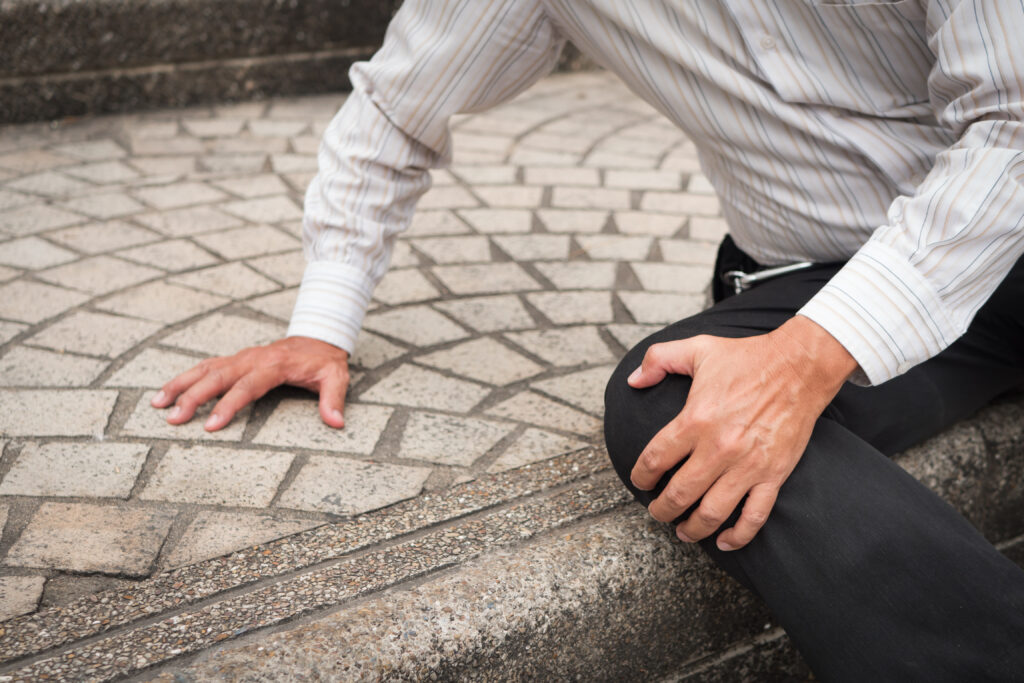
Slip and fall accidents can cause serious injuries that impact every part of your life—your health, your ability to work, and your ability to care for your family. At The Glenn Armentor Law Corporation, our experienced personal injury attorneys represent individuals and families throughout Lafayette, Acadiana, and South Louisiana who have been injured due to unsafe or hazardous property conditions.
In Louisiana, these cases are governed by premises liability law, which holds property owners and businesses accountable when dangerous conditions cause preventable injuries.
Under Louisiana Civil Code articles 2315, 2317, and 2317.1, property owners and custodians may be held legally responsible for injuries caused by a defect, condition, or hazard on their property when certain legal elements are met.
To establish liability in a premises liability case, an injured person must generally show that:
The condition presented an unreasonable risk of harm
The owner or custodian knew or should have known of the condition
The injury could have been prevented through the exercise of reasonable care
The owner or custodian failed to take reasonable steps to correct the condition or provide an adequate warning
In practice, courts often evaluate factors such as how long the condition existed, whether routine inspections were conducted, whether prior complaints or incidents occurred, and whether reasonable safety procedures were in place at the time of the accident.
Slip and Fall Accidents Involving Businesses and Stores
Slip and fall claims involving grocery stores, retail locations, restaurants, hotels, and other businesses are subject to additional legal requirements under Louisiana law.
Under Louisiana Revised Statute 9:2800.6, an injured customer must prove more than just the existence of a dangerous condition. In these cases, the injured person must generally establish that:
The condition presented an unreasonable risk of harm that was reasonably foreseeable
The merchant knew or should have known of the dangerous condition
The merchant failed to exercise reasonable care, including reasonable inspection, maintenance, or cleanup procedures
These cases often turn on evidence such as surveillance footage, cleaning logs, employee testimony, and the length of time the hazardous condition existed before the accident. Because this evidence may be lost or overwritten quickly, early investigation is often critical.
Common Causes of Slip and Fall Injuries
Slip and fall accidents can result from a wide range of hazardous property conditions. Some of the most common causes include:
Wet or slippery floors
Spilled liquids or tracked-in water
Uneven or broken flooring
Poor lighting in walkways or stairwells
Loose rugs or mats
Missing or damaged handrails
Cracked sidewalks, steps, or parking lots
Debris or obstacles left in walking paths
Property owners are not automatically responsible for every fall. However, liability may arise when unsafe conditions are allowed to exist without proper inspection, correction, or warning.
The “Open and Obvious” Doctrine
Louisiana courts recognize the open and obvious doctrine, which may limit or bar recovery when a hazardous condition is so apparent that a reasonable person would be expected to notice and avoid it.
Whether a condition is truly open and obvious is often a fact-specific determination. Courts may consider factors such as:
Lighting and visibility
The location and nature of the hazard
Whether distractions were present
Whether the property owner took actions that made the condition harder to detect
A condition is not automatically considered open and obvious simply because it was visible. Many cases involve hazards that may appear obvious in hindsight but were not reasonably noticeable under the circumstances at the time of the fall.
Comparative Fault in Louisiana Slip and Fall Cases
Slip and fall cases frequently involve issues of comparative fault. Under Louisiana Civil Code article 2323, fault may be allocated among all parties involved in an accident, including the injured person.
As a result:
Any damages awarded may be reduced by the percentage of fault assigned to the injured person
If the injured person is found to be 51% or more at fault, recovery of damages may be barred entirely
Because comparative fault can significantly affect the outcome of a claim, careful investigation and legal analysis are essential in premises liability cases.
Why Early Legal Guidance Matters
Premises liability claims often involve complex legal standards, strict evidentiary requirements, and defenses raised early by property owners and insurance companies. Critical evidence—such as surveillance video, inspection records, or incident reports—may be lost or destroyed if action is not taken promptly.
Early consultation with experienced premises liability trial lawyers helps preserve evidence, evaluate liability, and protect your rights from the outset.
If you or a loved one has been injured in a slip and fall or other premises liability accident, we encourage you to contact The Glenn Armentor Law Corporation as soon as possible. Our attorneys will review the facts of your case and help you understand your legal options under Louisiana law.